
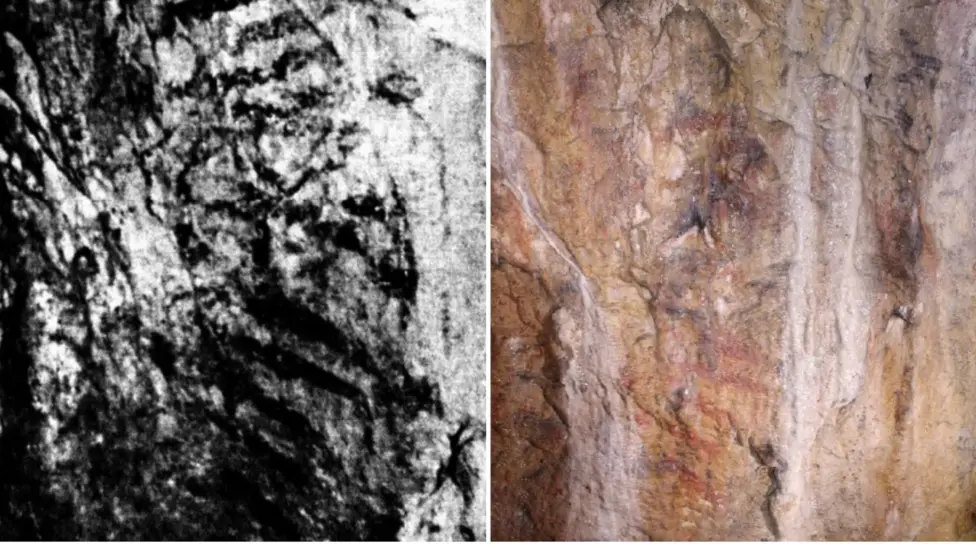
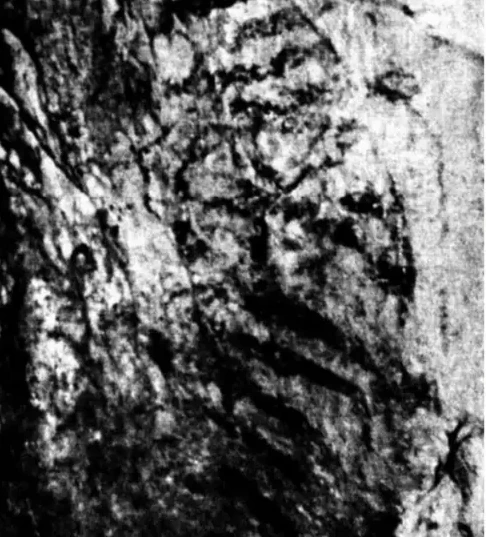
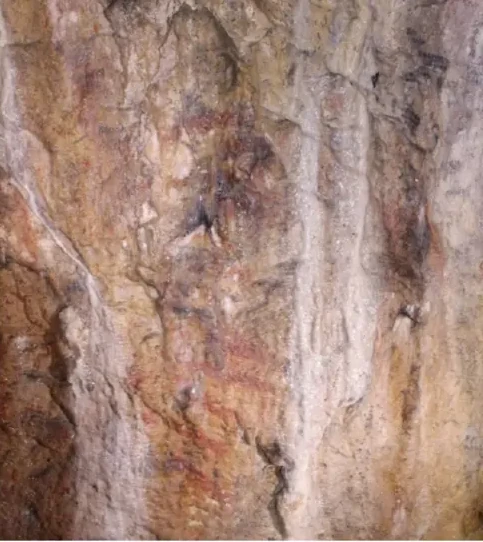
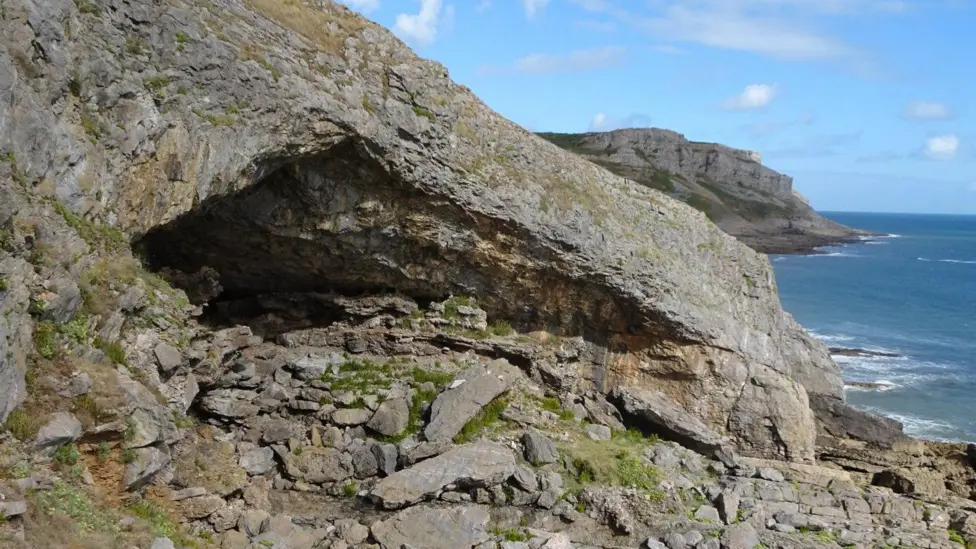
The series of 10 red horizontal stripes was first found on the wall of a side chamber of Bacon Hole cave in Gower, Swansea, in 1912, before being dismissed years later as a natural phenomenon.
But archaeologists have now used scientific advances to date the rock art to at least 17,100 years ago - also making it the oldest in north-western Europe.
Archaeologist and prehistoric art specialist George Nash said the art could have been used as a "communication system" but that its meaning was something "way beyond our comprehension".
In 1928, the initial discovery of the rock art was dismissed as "red oxide mineral seeping through the rock and not prehistoric art", the Guardian reported at the time.
It was rediscovered in 2022 after decades of being overlooked by archaeologists, partially due to the calcite flow on top of it making the rock art difficult to see.
BBC, June 2026: https://www.bbc.co.uk